Introduction of the Gojek Business Model
What if you build a business where your consumers are at ease, but professionals get a chance to work and earn? And you make a profit from different ways, just like the Gojek business revenue model.
It is a very great idea to get transport, food, courier, doctor consultation online, and other on-demand services with secure payment. Is it possible or real? Yes, by building the Gojek business model. It is a platform where people can book multiple on-demand services. To achieve this level of multi-service efficiency and market dominance, many entrepreneurs are now turning to a high-performance Gojek Clone App to launch their own digital ecosystems.
The very first step of converting the idea into a business is studying the market size.
Gojek’s business model is a part of the GoTo Group, and it has achieved brand recognition worldwide. According to GoTo Group’s 2025 earnings announcement, the company achieved record adjusted EBITDA profitability. While posting a 37% year on year increase in net revenue to Rp 4.2 trillion in the year 2025. Hence, on-demand services deliver profitability, meaning the company earns more than it spends in these areas. The fact itself proves that the Gojek Business Plan, which offers many services in one App and earns from each, is not only popular with users but also profitable at scale.
It also proved that the Gojek Business Model is not limited to one country or one service, but scalable and adaptable, and expanded worldwide. With too many services, there would be multiple Gojek Revenue Stream and what are those?
In this blog, we will explain what is Gojek, how Gojek works, what drives Gojek Revenue Streams, how Gojek makes a profit and how its structure supports long-term profitability.
What is Gojek?
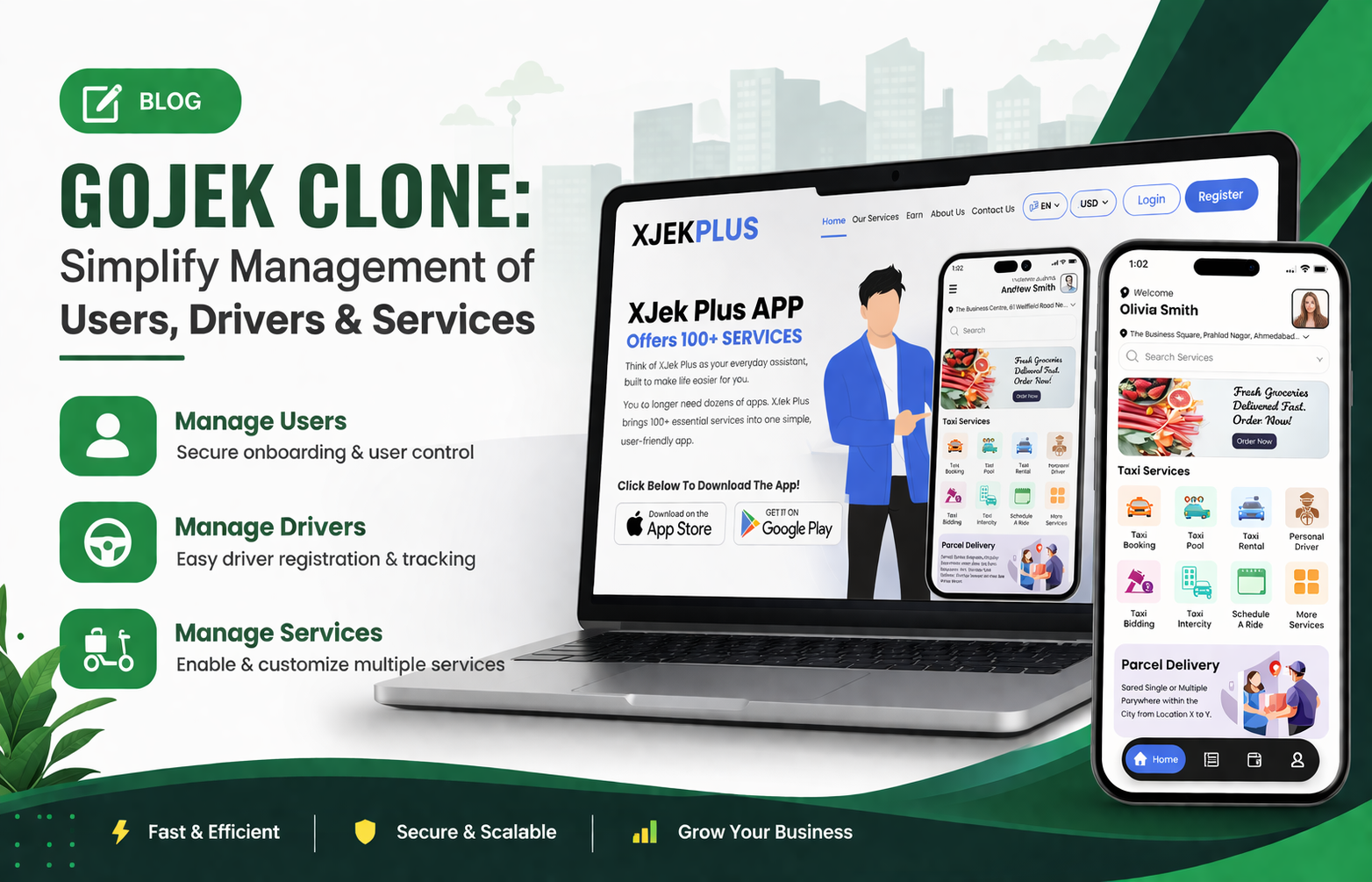
Gojek is a multi-service platform, commonly referred to as a Super App. Instead of solving a single problem, it integrates several everyday services into one application. These services include transportation, food delivery, courier and logistics, merchant services, and digital payments.
The core idea is simple: once users enter the ecosystem, they do not need to leave it. Every transaction, whether a ride, order, or payment, strengthens platform engagement and creates new monetization opportunities.
Gojek’s value proposition is simple but powerful:
- One app, multiple services
- Connects consumers with drivers and merchants
- Integrated digital payments and financial services
This integrated proposition allows users to complete multiple daily tasks, from booking a ride to ordering food to paying bills, without leaving a single application.
Because of this successful super app model, many entrepreneurs are now investing in Gojek Clone App Development to replicate the same multi-service ecosystem in their own regions. By leveraging a ready-made super app framework, businesses can launch faster, reduce development costs, and build a scalable on-demand platform similar to Gojek.
Gojek App Business Model
Gojek owner Nadiem Makarim, started as a call centre for booking taxi services in Jakarta in 2010. In 2015, it launched a mobile application for booking taxis, sending parcels, food delivery, and more. Later merged with Tokopeida and started offering financial services. However, before this, they used to offer 4 services, which are GoRide, GodSend, GShop, and Go food.
Today, it offers 101+ All-in-One Services connecting users and service providers and by earning a share value of each interaction through the Gojek Revenue Model. Instead of owning different assets such as vehicles, a retail store, and restaurants, the Gojek Business Model is built and manages the technology that enables interaction between parties.
Gojek Platform Structure Explained
Gojek operates as an intermediary marketplace that facilitates transactions between three main groups:
Consumers looking for on-demand services
They use the Gojek App for booking different services, such as
- Taxi Booking
- Parcel Delivery
- Online Video Consultation
- Delivery Genie & Runner
- Roadside & Towing Services
- And More
It can be booked immediately or in advanced for later by setting a date and time for the service. They can also track the live activity of the services booked. The best part that most customers love in the App is secure payment options and leaving a review after the completion of the services.
Merchants & Service Providers
Restaurants, retail stores, grocery shopping, and other service providers join the Gojek Platform to widen their customer reach and have digital visibility. And to access millions of users out there. Moreover, to manage online orders and bookings through the Super App. They work during their set working hours, which means no tension and no control from any boss. Hence, be the boss of your own work and get benefits such as:
- Digital Wallet
- Receive job request
- Manage order easily
- Manage store inventory
- And more.
Drivers & Delivery Genie/ Runner
The supply chain of the Gojek Business Plan consists of drivers like taxi drivers, delivery drivers, genie & runner. It is an opportunity for individual professionals to work independently without being tied to a fixed employer. They join the platform to:
- Get employment requests through the application
- Get flexible work hours, like working when they feel
- Make a profit on a per-service or per-delivery basis
- Get paid on the spot and not delay payments
- Get to do multiple deliveries and earn money
How Gojek Work in Real-Time?
Now, let’s quickly go through the booking process from start to finish of the Gojek Clone App:
- User registers using a phone number or social media account, and enables smart login.
- User selects Pet Care Services and chooses a sub-category like Pet Walking.
- Pet details are added if required.
- Nearby pet care experts are displayed with profiles and ratings.
- User selects an expert and sends a service request.
- User chooses a secure payment method (card, cash, or in-app wallet).
- Service provider accepts or rejects the request.
- Once accepted, the user tracks the provider in real time.
- App guides the provider using advanced Google Maps.
- Provider marks service started upon arrival.
- Provider marks service completed after finishing.
- User completes payment and leaves a review.
Key Revenue Streams of Our Gojek Clone
Next, the very important part: How Gojek Makes Profit? What is the source or sources? The real strength of Gojek Company Revenue is the different interactions through which it earns profit. Instead of relying on one single revenue stream, Gojek have multiple touchpoints such as:
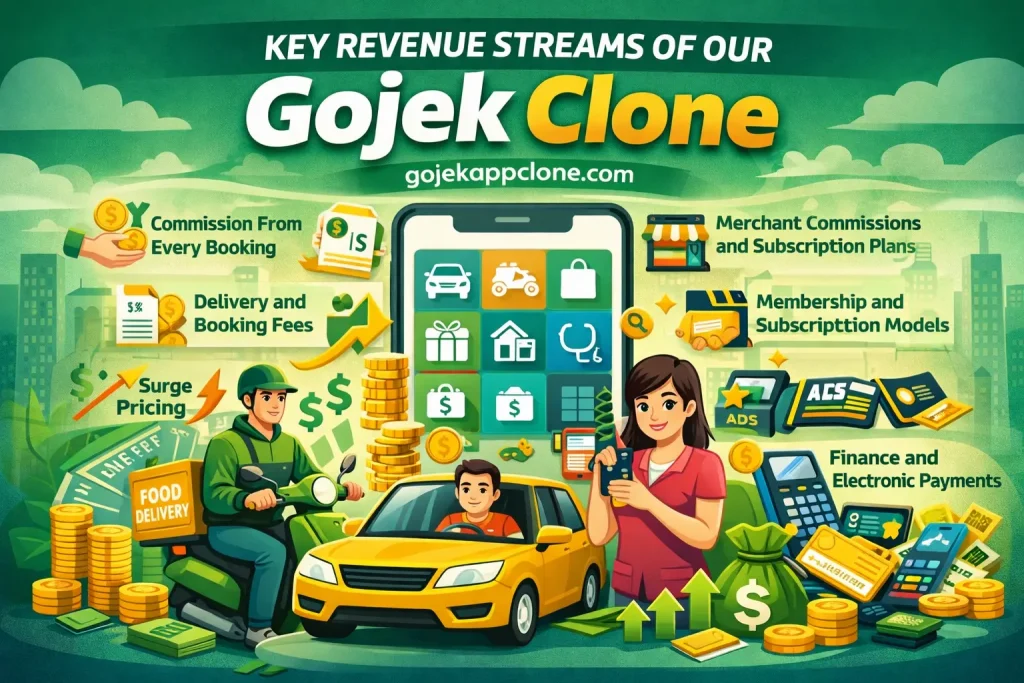
1. Commission From Every Booking
The Gojek revenue model primarily runs on commissions earned from every transaction made on the platform. Whenever a ride, food delivery, store order, or on-demand service is completed, Gojek earns a percentage-based commission. This ensures revenue generation every time value is exchanged.
- Commission charged on ride fares
- Food delivery and store order commissions
- On-demand service booking commissions
- Percentage varies by service category
Example: If a user books a bike ride worth $200, Gojek may take a 20% commission, earning $40 instantly.
2. Delivery and Booking Fees
Gojek charges users a delivery or booking fee for food, grocery, parcel, and service orders. These fees help cover logistics, technology infrastructure, and operational costs while adding a steady revenue stream.
- Delivery fees for food and parcels
- Fixed booking or service charges
- Fees vary by distance and order size
- Helps cover platform and logistics costs
Example: A food order priced at $350 may include a $30 delivery fee, which directly contributes to Gojek’s revenue.
3. Surge Pricing
Surge pricing applies during peak hours or high-demand periods when service availability is limited. Gojek increases fares dynamically, allowing higher earnings without raising fixed operational costs.
- Higher prices during peak demand
- Applied to rides and deliveries
- Encourages partner availability
- Boosts platform revenue
Example: During rush hour, a ride normally costing $150 may increase to $220 due to surge pricing.
4. Merchant Commissions and Subscription Plans
Merchants using Gojek pay commissions on every order received through the platform. Many also opt for subscription or premium plans to gain better visibility, analytics, and promotional advantages.
- Per-order commission from merchants
- Premium and subscription listing plans
- Access to advanced analytics tools
- Promotional placement inside the app
Example: A restaurant may pay 18% commission per order and subscribe to a premium plan to appear at the top of search results.
5. Membership and Subscription Models
Gojek offers membership plans to users that provide benefits like discounted delivery fees and priority services. These subscriptions generate recurring revenue and improve customer retention.
- Monthly or yearly user subscriptions
- Discounted delivery charges
- Priority service access
- Increased customer loyalty
Example: A frequent user subscribes to a monthly plan for $99 and saves on delivery fees across multiple orders.
6. Advertising in Apps and Featured Listings
Gojek allows merchants to advertise and feature their listings inside the app. These paid placements improve visibility, drive more orders, and create an additional marketing-based revenue stream.
- Sponsored listings for merchants
- Banner and in-app advertisements
- Higher visibility in search results
- Performance-based promotions
Example: A grocery store pays to be featured on the home screen, resulting in higher order volumes.
7. Finance and Electronic Payments
Gojek earns revenue through its fintech ecosystem by charging fees on digital payments, wallet transactions, and financial services. Products like GoPay, BNPL, and lending services create long-term monetization opportunities.
- Payment processing fees
- Wallet transaction commissions
- Buy Now, Pay Later services
- Merchant and user financial products
Example: When a user pays via GoPay for a $500 order, Gojek earns a small transaction fee from the merchant.
Gojek Business Management and Cost Structure
A sustainable business model should be a balance between revenue and good cost management. Particularly for a tech platform on a large scale. The categories of the main costs in the Gojek model are presented below.
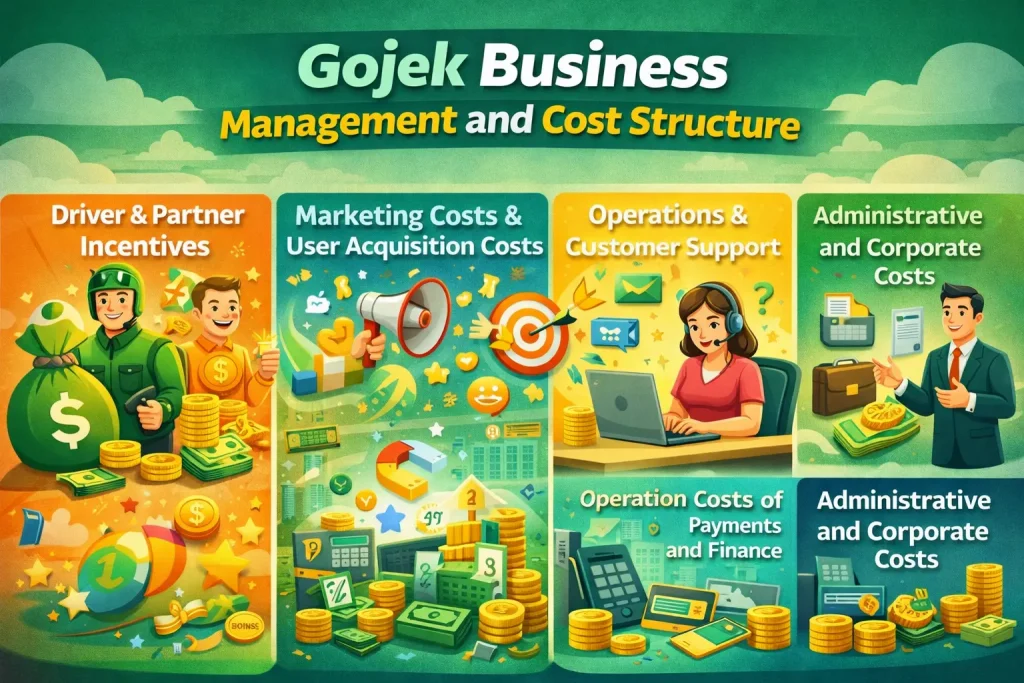
- Driver & Partner Incentives
To keep the quality of supply and services, Gojek employs incentive programs to recruit and retain drivers and delivery partners. Such incentives are important competitive instruments, particularly in markets that have stiff competitors.
- Marketing Costs and User Acquisition Costs
Growth of the market, especially in new geographical locations, involves spending on awareness, promotion and incentives for the users.
- Operations & Customer Support
The teams of customer service and partner support are used to ensure the quality of services. The operational costs cover dispute management, boarding, training, and logistics of the platform on a daily basis.
- Operation Costs of Payments and Finance
Digital transactions are processed at a fee to payment networks, wallet management systems, and compliance systems. Nevertheless, with the increase in the adoption of financial services in fintech, they can be frequently compensated by greater margin revenue.
- Administrative and Corporate Costs
These overheads are finance, human resources, legal, corporate strategy, and governance functions, which contribute to growth and compliance.
Key Strategies That Make the Gojek Revenue Model Work
The Gojek Business Model is made to work through the following key strategies. The strategic pillars of Gojek are the success of the platform as they are scalable and sustainable.
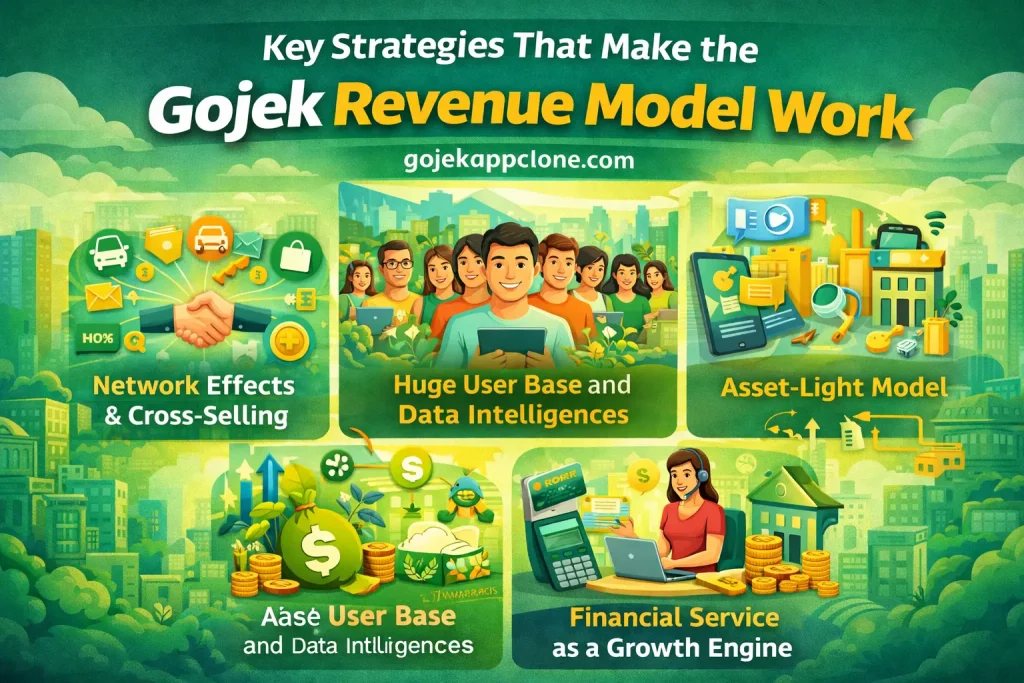
- Network Effects & Cross-Selling
After a user has interacted with a single service, such as ride-hailing. Gojek uses the interaction to cross-sell other services, including food delivery services, payments, or parcel services. More work on a single platform would bring lifetime interaction and turnover.
- Huge User Base and Data Intelligences
Gojek has many types of transactions running through a single application, and user data is one of the company’s strongest assets. Data-driven decisions drive personalized offers and efficient route planning. It also drives demand forecasting and dynamic pricing. This, in its turn, enhances profitability and quality of service.
- Asset-Light Model
Gojek does not have cars, products, or brick-and-mortar outlets. Rather, it links assets held by partners and demand among users, holding down capital expenditure compared to conventional businesses in transport or retail.
- Financial Service as a Growth Engine
Secure payment options such as digital wallets and wallet-to-wallet transfer will not only generate revenue but also lead to more user stickiness. When users save value, send money or get credit through the app, they will be inclined to use more services as well.
Evolution of the Gojek Business
- 2010: Founded as a motorcycle ride-hail call center in Jakarta, Indonesia.
- 2015: Launched the first mobile app featuring rides and deliveries.
- 2016–2018: Expanded services to food delivery, logistics, and digital payments.
- 2018–2021: Launched multiple services, growing into a super app with financial tools.
- 2021: Merged with Tokopedia, forming the Go To ecosystem.
- 2025: Continued fintech growth, profitability improvements, and expansion in digital payments and financial services.
Conclusion
The Gojek business model has shown how a super app can expand in terms of services, customers, and locations. It also creates several diversified Gojek Revenue Models. Not to mention ride-hailing and deliveries, merchant services, subscriptions, advertisements, and embedded financial products can all be found in the model created by Gojek. It serves as an example of sustainable digital marketplaces.
In the case of businesses and start-ups that would like to develop similar platforms, the architecture of Gojek smart move. In particular, its emphasis on network effects, asset-light scalability, and fintech integration is the key to success in the long run.
Frequently Asked Questions
A Super App is a single platform that offers multiple services like taxi, courier, online video consultation, food delivery, hire a Runner for daily work, hire a beautician, and more.
Yes. Start-ups can gradually modify the Gojek Business Model because it operates on the theory of “Don’t Buy, Rent it” and has state-of-the-art technology.
Yes. Marketing and promotional activities are important initial expenses when entering the market and expanding to new regions or services.
Automation, data analytics, routing, and digital payments help in minimizing operational inefficiencies and manual efforts.
The features that should be incorporated in a Super App like Gojek, such as smart login, real-time tracking, secure multiple payment options, clear interface, review system, and more.
The key cost components of the Gojek Business Model are technology infrastructure, incentives, marketing, operations, payment systems, and administrative expenses.